Learning Outcomes
i. Identify the major groups of protists: protozoa, algae, myxomycota, and oomycota
ii. Recognize the distinguishing characteristics of each group
iii. Understand the diverse lifestyles and ecological roles of protists within each group
iv. Appreciate the evolutionary relationships among different protist groups
Kingdom Protista:
The kingdom Protista encompasses a vast array of single-celled and multicellular organisms, exhibiting remarkable diversity in form, function, and habitat. To better understand this diverse group, scientists have classified protists into several major groups based on shared characteristics and evolutionary relationships.
i. Protozoa
Protozoa, meaning "first animals," are a diverse group of motile protists that are typically heterotrophic, meaning they obtain their food from other organisms. They can be further classified into various subgroups based on their mode of locomotion, such as flagellates, ciliates, sarcodines, and sporozoans.
Flagellates: Flagellates are characterized by one or more hair-like appendages called flagella, which they use for locomotion and capturing food particles. Examples include Euglena and Giardia.
Ciliates: Ciliates are covered with tiny hair-like structures called cilia, which they use for locomotion and capturing food particles. Examples include Paramecium and Stentor.
Sarcodines: Sarcodines lack flagella or cilia and move by extending and retracting their cytoplasm, forming pseudopodia. Examples include Amoeba and Foraminifera.
Sporozoans: Sporozoans are obligate intracellular parasites, meaning they can only survive and reproduce within the cells of other organisms. Examples include Plasmodium, the causative agent of malaria, and Toxoplasma gondii, the causative agent of toxoplasmosis.
ii. Algae
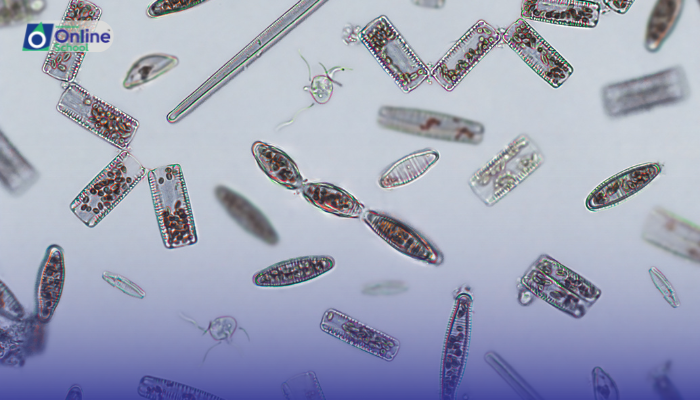
Algae are a diverse group of photosynthetic protists that are responsible for a significant portion of the primary production on Earth. They can be unicellular or multicellular and range in size from microscopic single cells to large seaweeds. Algae are further classified based on their pigments and other cellular characteristics.
Chlorophyta: Chlorophyta, also known as green algae, contain chlorophyll a and b, giving them their characteristic green color. They are found in a variety of freshwater and marine environments. Examples include Chlamydomonas and Spirogyra.
Chrysophyta: Chrysophyta, also known as golden algae, contain chlorophyll a and c, along with other pigments, giving them their golden-brown color. They are found in both freshwater and marine environments. Examples include Diatoms and Dinoflagellates.
Rhodophyta: Rhodophyta, also known as red algae, contain chlorophyll a and phycoerythrin, a red pigment, giving them their characteristic red color. They are primarily found in marine environments. Examples include Porphyra and Gracilaria.
iii. Myxomycota
Myxomycota, also known as slime molds, are a fascinating group of protists that exhibit a life cycle that alternates between a motile, amoeboid form and a non-motile, spore-producing form. They are found in moist terrestrial environments and are typically saprotrophs, decomposing dead organic matter.
iv. Oomycota
Oomycota, also known as water molds, are a group of fungus-like protists that share some similarities with true fungi, but they differ in their cell wall composition and reproductive methods. They are found in aquatic environments and can be parasitic or saprotrophic. Examples include Phytophthora infestans, the causative agent of late blight in potatoes, and Pythium, a common plant pathogen.
The kingdom Protista encompasses an incredible diversity of organisms, each with unique characteristics and ecological roles. By understanding the major groups of protists, we gain a deeper appreciation of the remarkable diversity of life on Earth. These groups not only play essential roles in various ecosystems but also provide valuable insights into the evolution of eukaryotic life. As we continue to explore the microbial world, we can expect to uncover even more of the fascinating and diverse protists that inhabit our planet.
